For some, the weather of that day remains more vivid than a face—like the shade in the place they shared, the wind against their skin, or an afternoon that felt unusually long. '花に亡霊' sings of time preserved through such sensations. Though the title carries a chill, what is felt first within the song is the warmth of summer.
Why a trivial afternoon lingers
The memories this song evokes are not grand events that anyone could easily explain; they are closer to time spent together without much happening. That is why there is room for a listener's own summer, even without knowing the specific details. It was not some extraordinary occurrence that made those moments precious, but rather the presence of that person that transformed an ordinary scene.
It would be best not to view the 'ghost' in the title solely as a frightening entity. It can be read as a trace that suddenly overlaps with the landscape before one's eyes, even though it has already passed. When the same season returns, the feelings of that time briefly resurface. Each person's memories layer together: people who are no longer around, relationships that have ended, and childhoods that can never be met again in the same form.
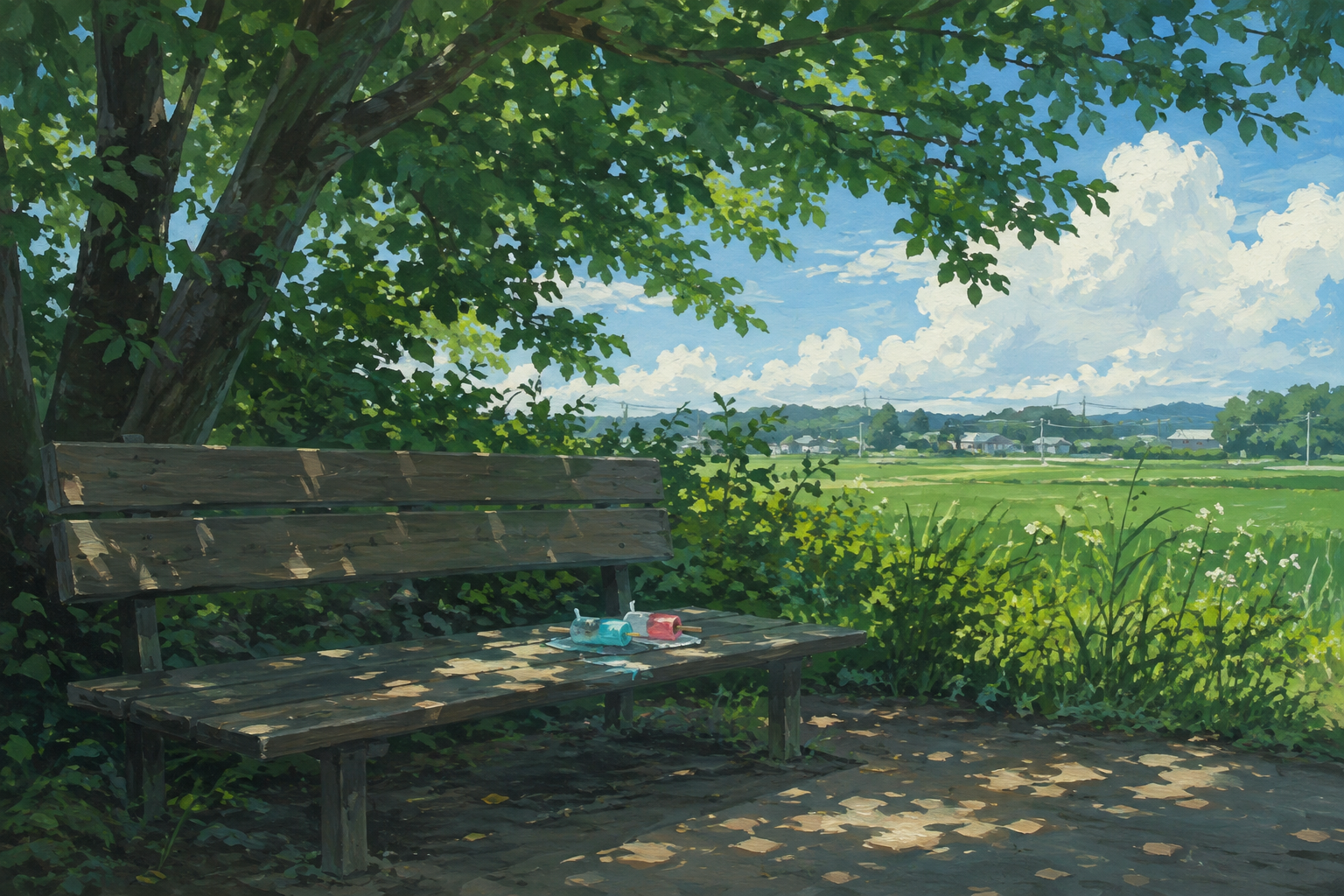
What cannot be fully captured in photographs or paintings
People take photos and write things down to keep from forgetting, yet a record can never capture the entirety of a moment. Even if the scenery is preserved, it is difficult to hold onto the mood of the person standing nearby or the specific atmosphere between them. 「꽃에 망령」 prompts reflection on both the desire to preserve memories and the parts that inevitably slip away.
In this regard, listening to a song differs slightly from looking through a photo album. While photographs display the appearance of a particular day, music can also evoke the emotions that have accumulated between that day and the present. The fact that memories fade does not render cherished time fake. Even if specific dates or conversations do not come clearly to mind, the changes in one's heart brought about by that person can remain with the current self.

Summer returns, but that day does not.
The song's desolation also stems from the fact that seasons repeat while human time flows differently. Flowers bloom and the wind blows again this year, yet the one gazing at that scenery is no longer who they used to be. The vivid colors of summer only serve to highlight a time that can never be returned to.
When revisiting the track, let the bright scenery and the lingering resonance of suis's voice unfold together. There are moments that resist being categorized as purely sad or joyful. 「꽃에 망령」 does not rush to pull listeners out of their memories; instead, it allows for a brief moment of longing before making room to feel the wind blowing in the present.

Listen along with the track details
Open the official video on YouTube
花に亡霊 – Yorushika
「花に亡霊」 is a digital single released on April 22, 2020, and serves as the theme song for the animated film "I Want to Cry So I Wear a Cat Mask." n-buna handled the lyrics, composition, and arrangement, while suis took charge of the vocals.
It was also included on the album 盗作, released on July 29, 2020. Listening to it alongside the film allows for a deeper connection with the characters' emotions, while hearing it within the album highlights its link to other tracks that explore memory and loss.
If this song resonated with you
Kaede — A fitting follow-up to listen to after Spitz, this song captures the heart of someone who carries on living while still unable to forget the voice of a departed person, leaving behind a lingering sense of longing.
Kono Yuki — a ballad that leaves behind the distance of not fully knowing each other's hearts, even after spending a winter like Remioromen.