Judging by the chorus alone, this sounds like a festive track that invites you to mingle and play with others. However, the people gathered at the invitation of “Dragon Night” are not close friends from the start. They are individuals who have clashed for their own reasons, now sitting together under the same light for a moment. Once you recognize this setup, the song’s upbeat atmosphere carries a different weight.
When the certainty of being right blinds you to the other person
When a conflict arises, it can feel as though the matter will resolve itself once the other person understands our perspective. We might assume that simply clarifying what we are trying to protect and why we are angry is enough. Yet the other party may also have their own reasons for believing they are right. The song brings this uncomfortable reality into the heart of the celebration.
The call here to consider each other's perspectives is not meant to justify every action. Understanding a counterpart's reasons is distinct from agreeing with their behavior; rather, it serves as an occasion to reflect on what wounds one's own certainty may have left behind. The song's questions feel most immediate when listeners recall their own conflicts.
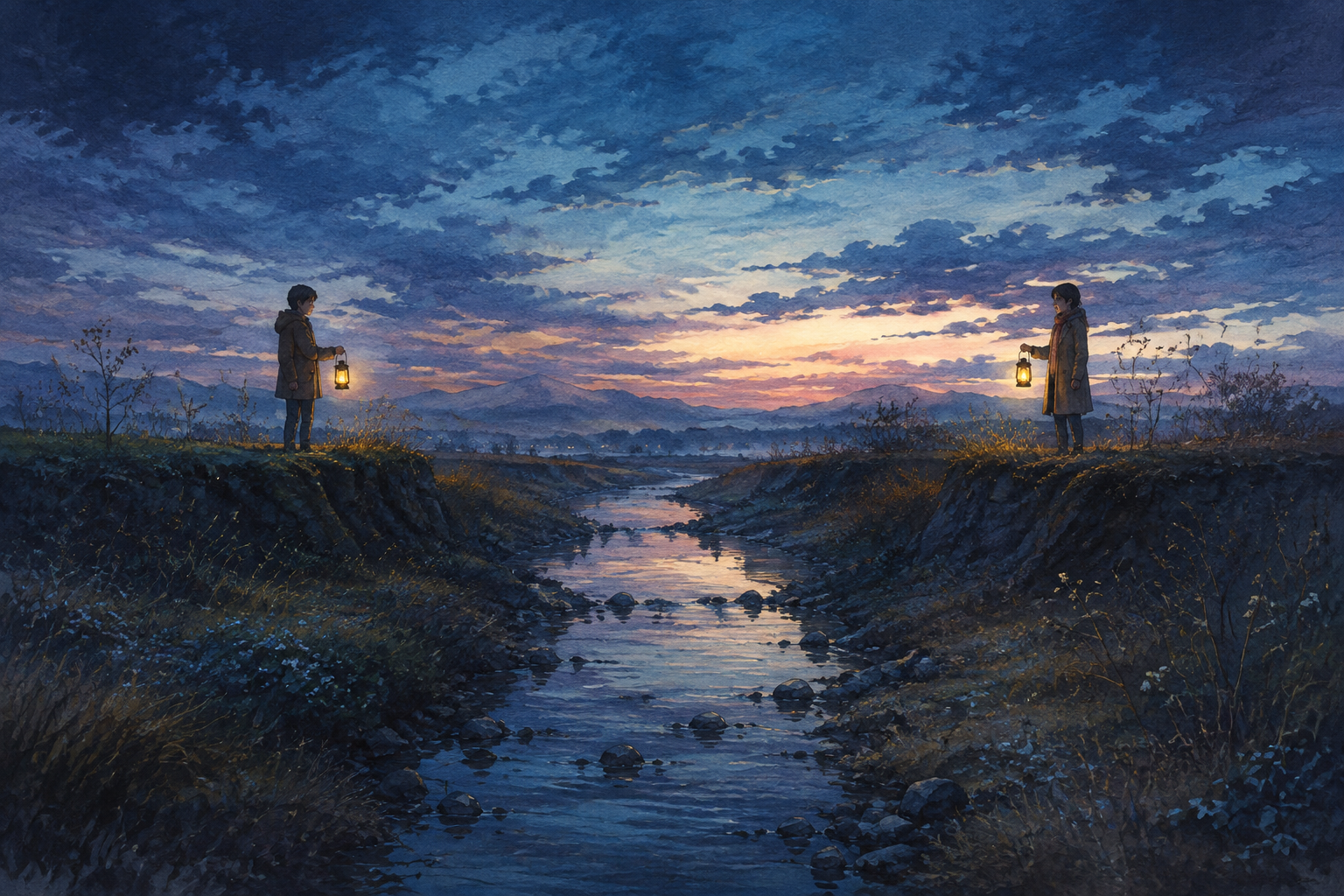
Image source: Original Korean article
There is room to be together even before reconciliation is complete.
The night in this song feels less like a miracle where everyone thinks alike and more like a scene of people coexisting briefly despite their differences. If one believes that all problems must be resolved before sitting together, meetings will always be postponed. Perhaps the act of pausing an argument to sing the same song is what actually makes further conversation possible.
It is worth listening closely to the phrase "living like friends." It carries a cautious nuance, making it more realistic than a declaration that one has already become a perfect friend. Even if there are still unfamiliar or unpleasant aspects, one can face another person as an individual. The warm imagery of a campfire and a rhythm suited for dancing help create this temporary space.

Image source: Original Korean article
Why they move together in the part where the singing stops
The members explained in a TOKYO FM track commentary that they were initially wary of the instrumental section at the song's peak. Saori described that passage as functioning like an additional chorus; once the lyrics finish conveying their message, the music opens up space for people to move together.
Next time you listen, don't stop at the part where the title is chanted; carry it through to the moment the instrumental takes center stage. The words that try to persuade each other pause for a beat, allowing everyone to share the same rhythm. While music may not instantly resolve real-world conflicts, it can leave behind the sense of being in the same space as another person. This song's celebration amplifies that small possibility.

Image source: Original Korean article
Track information and listening notes
Open the official video on YouTube
Dragon Night – SEKAI NO OWARI
Released on October 15, 2014, the single features lyrics and composition by Fukase, with Nicky Romero serving as sound producer.
According to the members, Nicky Romero's arrangement was built on top of sound data created by Nakajin. Saori played the accordion. The band shares their production story in the broadcast record below.
According to the members, Nicky Romero's arrangement was built on sound data created by Nakajin. Saori handled the accordion performance. The broadcast transcript offers a firsthand account of the production process from the band itself.
If this song resonated with you
They are still underground. This is a song about two incomplete people counting the beat together as they move toward the next scene.
The song traces how Oz.'s plea not to leave yama alone transforms into a mutual promise of protection.