Despite the title referring to unrequited love, the song begins by envisioning a future of growing old together. The feelings in "Kataomoi" do not remain confined to gazing at someone from afar whom one has yet to meet. There is also a persistent desire to express affection for those already close, coupled with an enduring uncertainty about whether that love has been conveyed enough. It is a song about how one can still be clumsy in the presence of someone they have loved for a long time.
Could they still be loved on the days when they can no longer perform as well?
The opening scene features facial wrinkles and a guitar that refuses to play as intended. Rather than focusing on the two people's most radiant moments, the song first imagines the time when age has diminished what they are capable of. Instead of promising to maintain their impressive appearance for long, it asks whether they can still sing together even on such days.
The longing that follows is equally modest. Rather than grand applause or roaring cheers, the desire is simply for one person to understand. At this point, the song shifts from a performance meant to impress an audience into an intimate conversation between two people. The wish that their bond not be sustained solely by skill or youth is captured in the small question of whether they will sing together.

Photo: Original Korean article
Placing the center of love in an ordinary today
In the middle section, a metaphor emerges that views life as a multi-course meal. Today is treated as the main course, with both ups and downs incorporated into the same dining experience. The attitude is not one of enduring the present until a more magnificent future arrives, but rather a desire to savor even a turbulent today.
That feeling leads to a request that no special occasion or witty remark is needed; what lingers more powerfully is the plea simply to be allowed to stay by their side. It does not mean that love has grown so deep that expression has become unnecessary. Rather, as time spent together increases, the heart expands, prompting them to ask again for recognition from someone who has already become familiar.
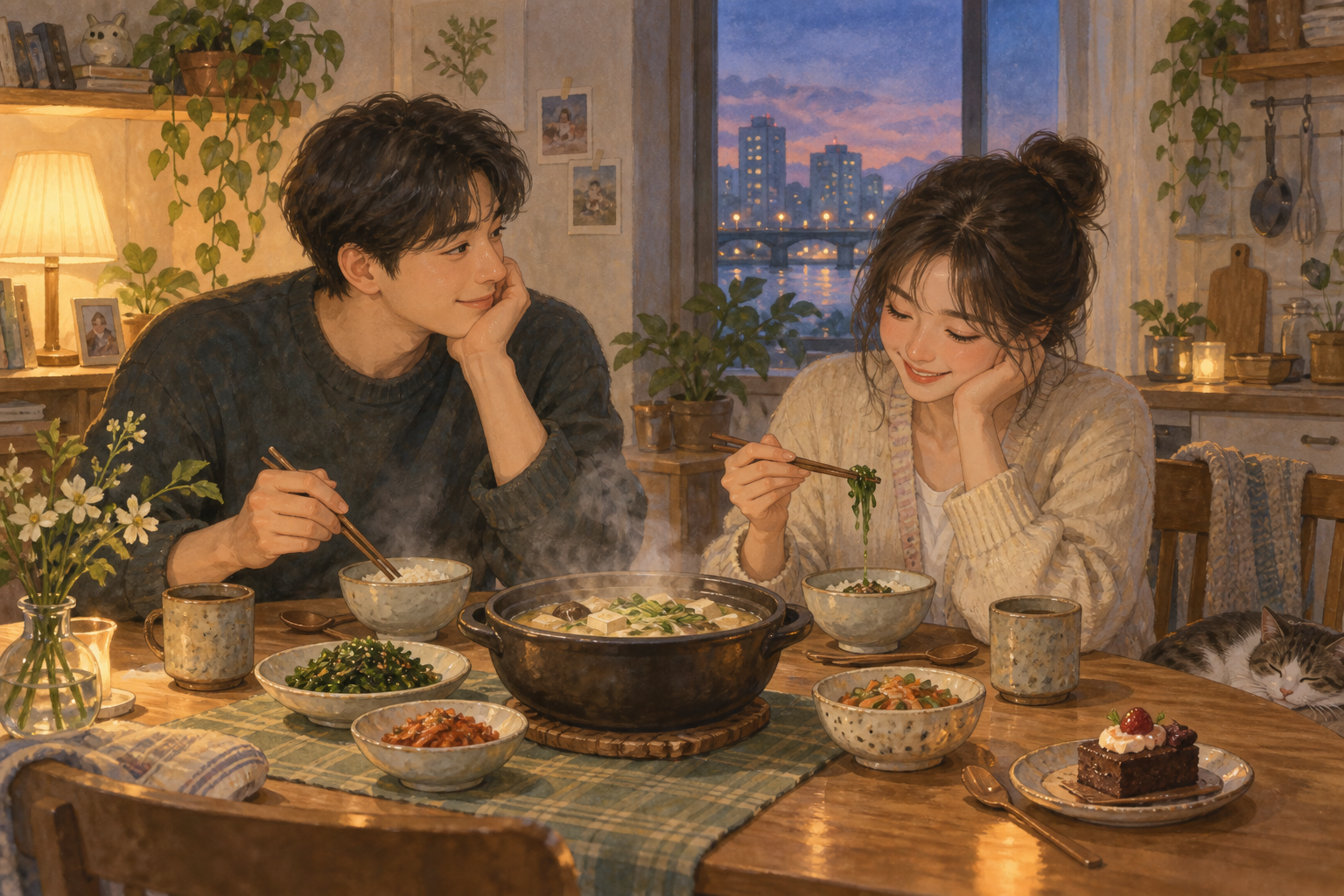
Photo: Original Korean article
Why they call it unrequited love even when together
The imagination in the latter half moves toward a place more painful than wrinkles. Even as they try to accept that their partner might forget them, they insist they cannot bear being the one to leave first. Beneath this apparent acceptance of anything lies a lingering fear of parting.
The phrase "eternal unrequited love" appears here, yet the chorus repeatedly sings of the joy that a dream has come true, making it difficult to simply label the situation as one where the speaker is not loved in return. It sounds closer to a state of rediscovering affection anew each day rather than taking the other person's feelings for granted. This also makes it natural that she cannot find a grand sentence even for her final confession; no matter how long the love lasts, the words offered to that person remain cautious.

Photo: Original Korean article
Listen along with the track details
Open the official video on YouTube
“Kataomoi” is a track on Aimer’s album “daydream,” released on September 21, 2016. Uchisawa Takahito of androp provided the composition and produced the song.
The video is the full-version music video from Aimer's official channel. Listening to it while holding in mind both the title's meaning—unrequited love—and the lyrics' vision of a long-lasting future together reveals just how carefully this song regards the endurance of love.
Official Aimer 'daydream' introduction and full-length music video
If this song resonated with you
Hata Motohiro's "Sunflower Promise" shares a similar sentiment: recognizing the warmth of someone who has been quietly by one's side and wanting to return that kindness in kind.
Yonezu Kenshi's "Aine Kleine" pairs well with the feeling that the more one is happy, the more frightening parting becomes. Both songs leave a small unease lingering within the certainty of love.