The feeling that comes with looking at an old photograph is rarely just longing for the person in it. The image also brings back a version of oneself who was smiling, still believing they could achieve something. "Spring Forget-me-not" is a song about finding one's own feelings that were let go at that time while reflecting on someone who has gone.
We are still smiling in the photo
At first, the two figures preserved in the frame and the present-day heart observing them are placed side by side. The photograph remains unchanged, yet the person looking at it is already living in a different time. The expression that the future they had hoped for together slipped through their fingers is therefore painful. Along with one person's absence, there is a sense of having lost even the shape of a life that was assumed to continue naturally.
Yet the speaker still searches for traces of the past, reaching out to the two figures from that day. It is not that they are unaware things have ended; rather, their heart simply cannot keep pace with what they know. The reason they continue to look back on those times seems to be more than just a longing for the relationship itself—it also reflects a desire to hold onto the version of themselves who once lived within it.
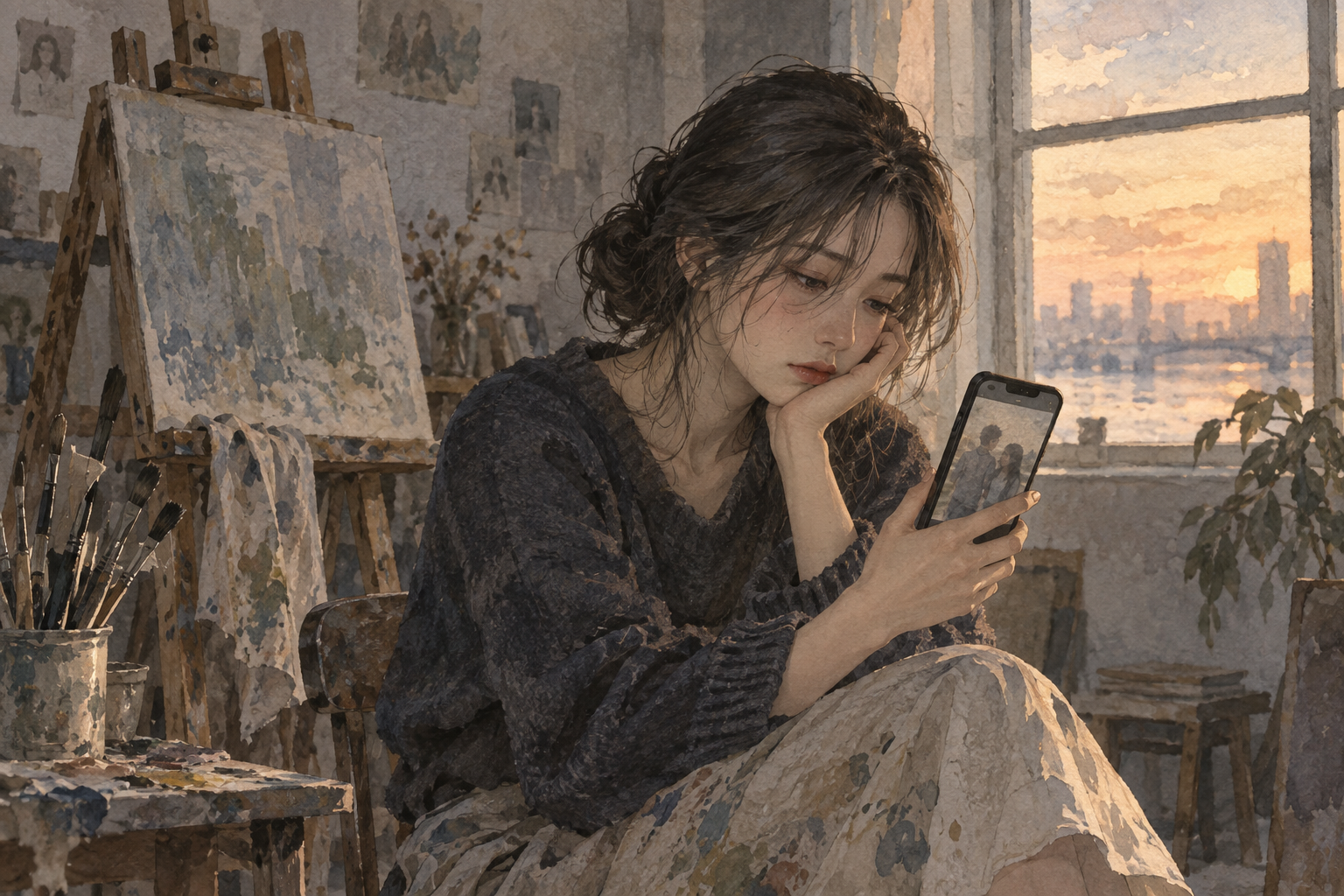
Photo: Original Korean article
The door shut by the word 'reality'
In the middle of the piece, there is a confession about having drawn one's own boundaries. By turning away from reality as an excuse, the flowers blooming beyond that line were never truly seen. It is a realization that while feeling the world offered nothing, the door to one's own heart also closed. This reads less like harsh self-criticism and more like a moment of reflection on what one had chosen not to see since some point in time.
The original work features a character who, after graduating from an art school, grows weary of the gap between idealism and reality before eventually standing back in front of a canvas. This background gives more concrete weight to the expressions involving flowers, colors, and redrawing. The future one wishes to reclaim includes not only love but also the things they had wanted to try. The line about finding the self that someone once loved is therefore not read merely as a desire to be chosen again by that person.
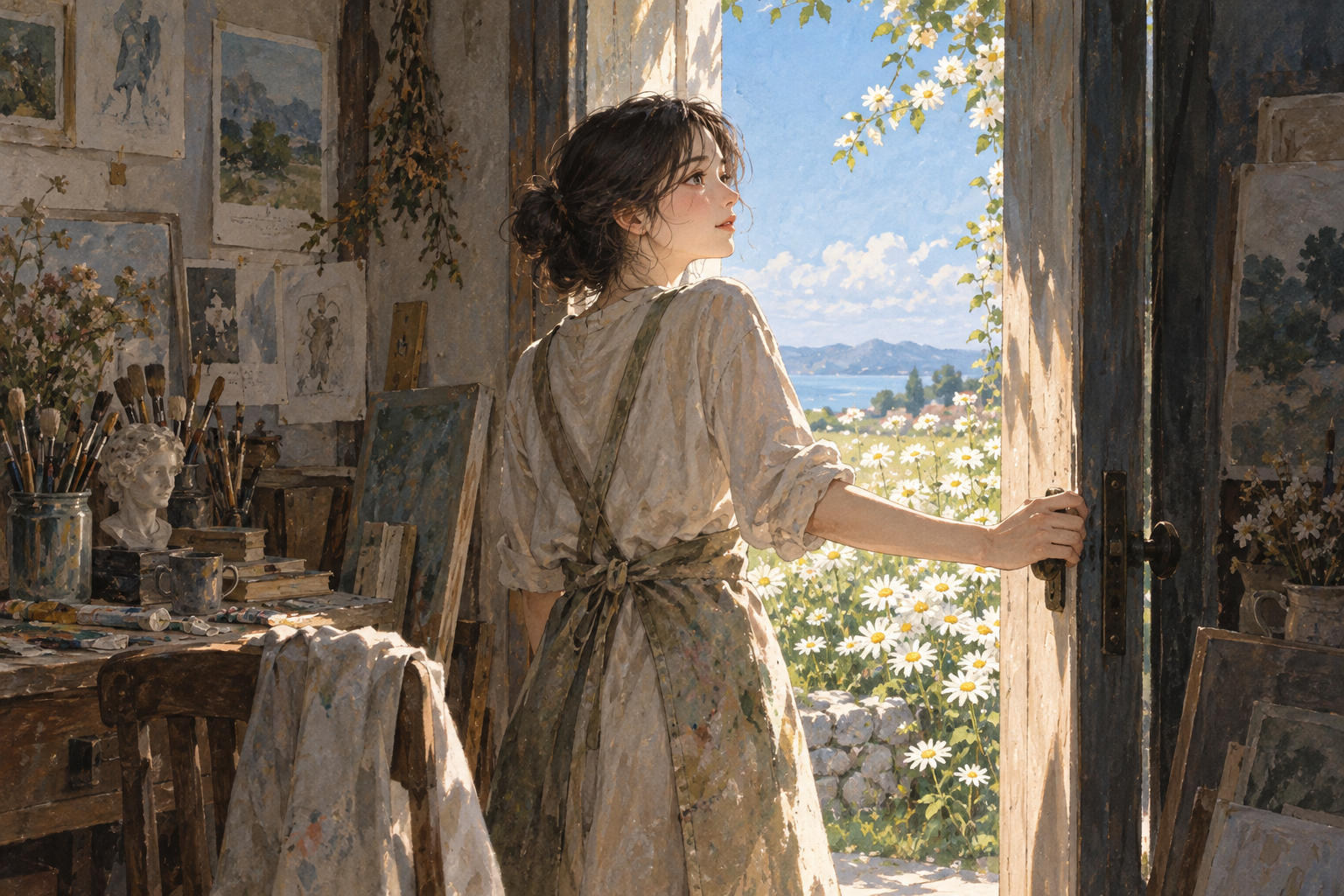
Photo: Original Korean article
When the hand that once reached toward the past offers a farewell
In the latter half, what memory illuminates is not only days that have already ended. It also reveals a future left closed like an unopened bud. By looking back on the past, one comes to recognize the hopes buried within it. The discovery that hidden feelings are still alive becomes the strength to envision things anew. Within this same song, nostalgia shifts from something that holds one's feet in place to a source of power for moving forward.
In the end, a resolve emerges to walk through the time that follows, even without the other person by their side. It is particularly effective how the hand initially reaching toward the two figures of the past now serves as a gesture of farewell. Erasing good memories is not a prerequisite for moving forward. Acknowledging the shared time while choosing not to remain trapped within it—this song's new beginning is quiet and specific in that regard.
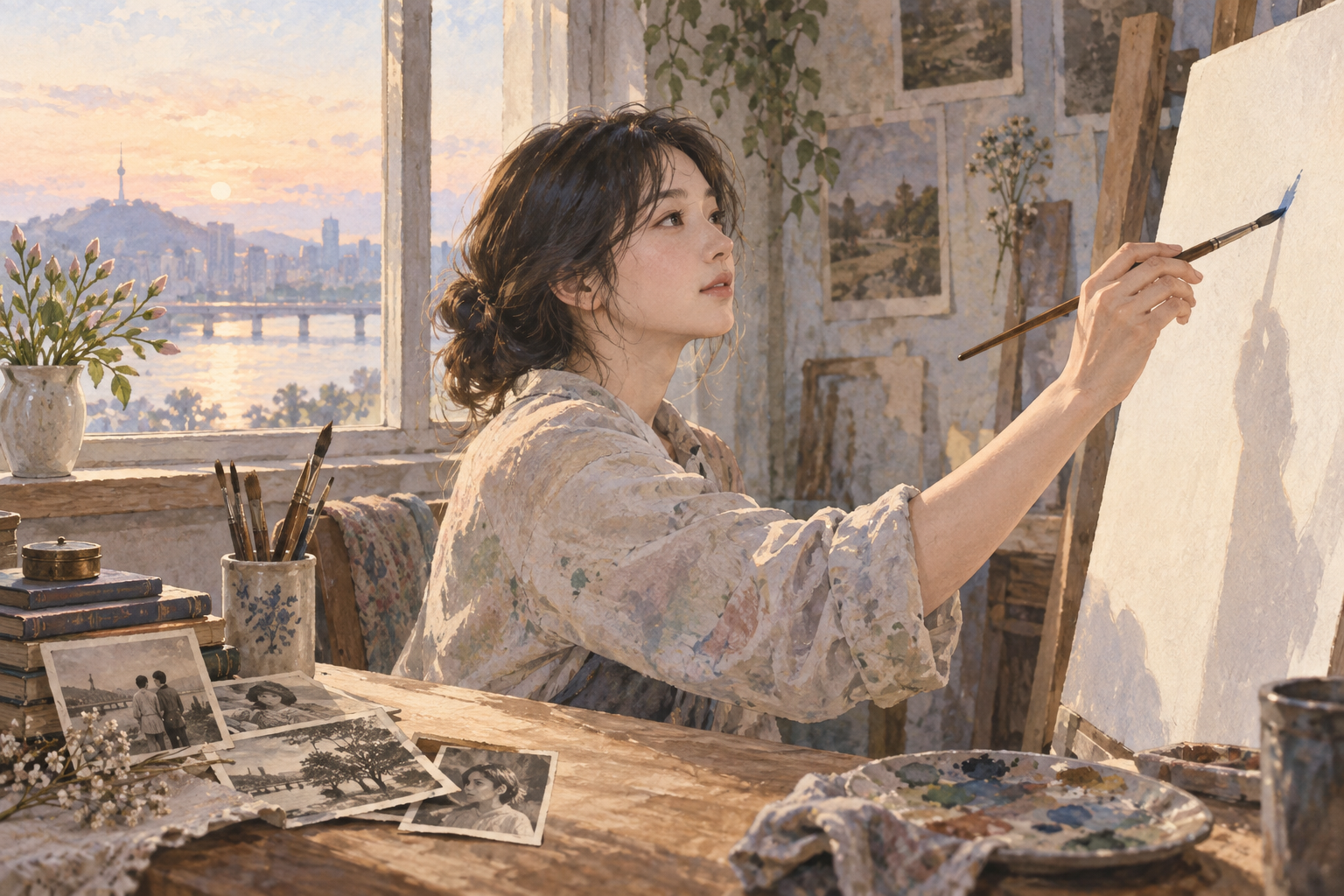
Photo: Original Korean article
Listen along with the track details
Open the official video on YouTube
Harujion is a YOASOBI song written and composed by Ayase and performed by ikura. It was produced based on the short story "Soredemo, Happy End" by 橋爪駿輝 and released on May 11, 2020.
Sony Music's introduction to the source material describes a character who, after graduating from art school and growing weary of reality, returns once again to stand before a canvas. With this background in mind, the song's expression of 'drawing again' takes on greater depth.
Official YOASOBI video and Sony Music track and source material introduction
If this song resonated with you
Even if not a fool — Zutto Mayo is a song where words that could not be said, despite already knowing them, remain alongside memories of summer.
Kanade is a song of parting where the desire to hold on and the wish to let go move in tandem.