Cherry can sound like the beginning of a romance, yet its speaker is already carrying a time that cannot be recovered. That tension gives the brightness its emotional weight. One way to hear it is as a person moving forward with memory, rather than choosing between complete forgetting and a guaranteed reunion. Love's effect on a life and the outcome of a relationship need not be the same thing.
Brightness can belong to a memory
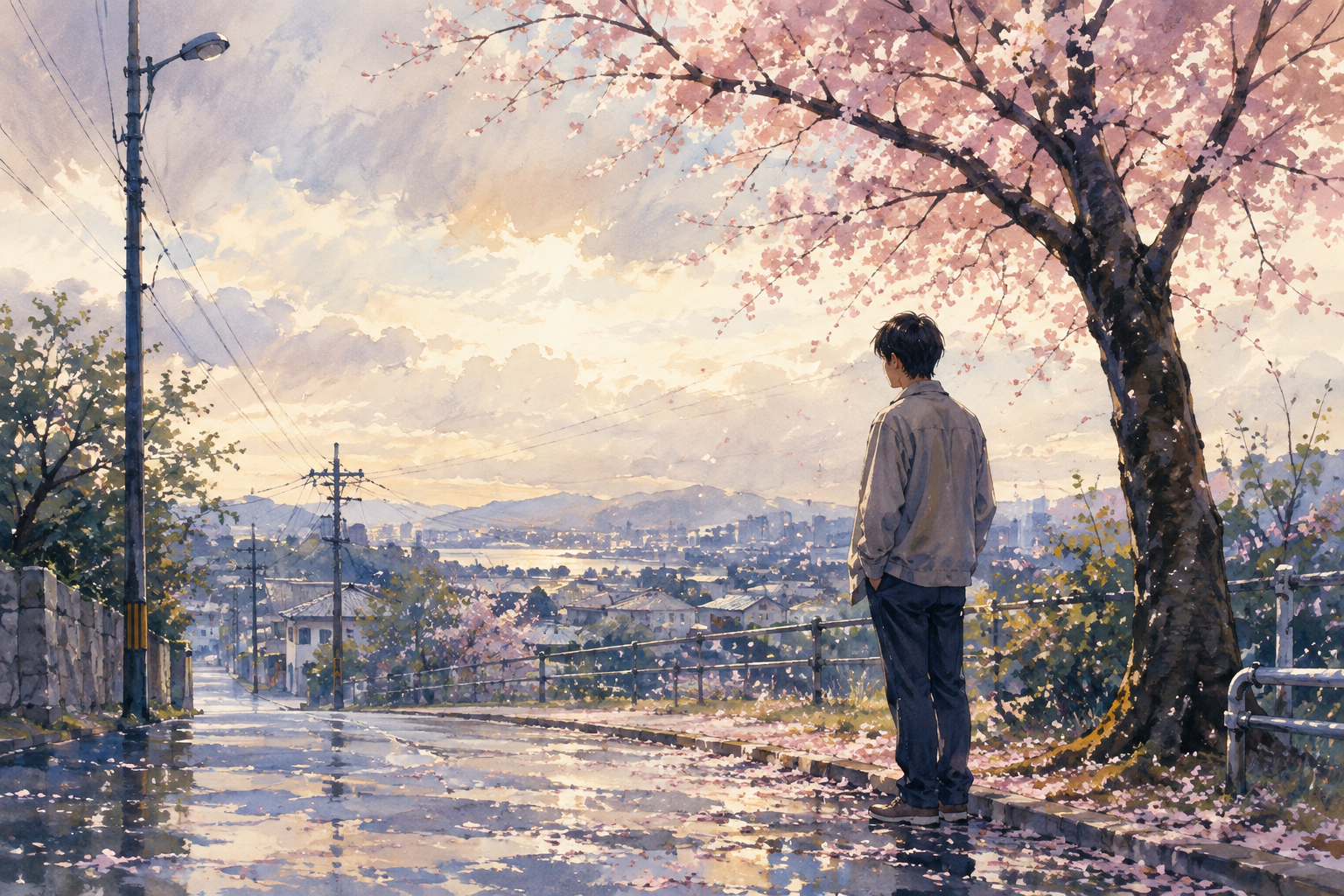
The opening's commitment to remembering sits beside movement along a winding road. The mood is not simply a couple celebrating an uncomplicated present. The warm sound can instead be heard as part of what has survived: the memory still contains pleasure, even though the shared moment cannot be entered again. Brightness and sadness do not have to cancel one another out.
Spring offers a useful analogy. A season's return can suggest a fresh beginning while also making an earlier spring unusually vivid. The setting changes, but a remembered conversation seems briefly nearby. This is the visual idea developed in these illustrations, not a claim that every pictured scene appears in the song. It explains why an outwardly cheerful atmosphere can deepen longing rather than conceal it.
The ending does not get to judge every earlier moment
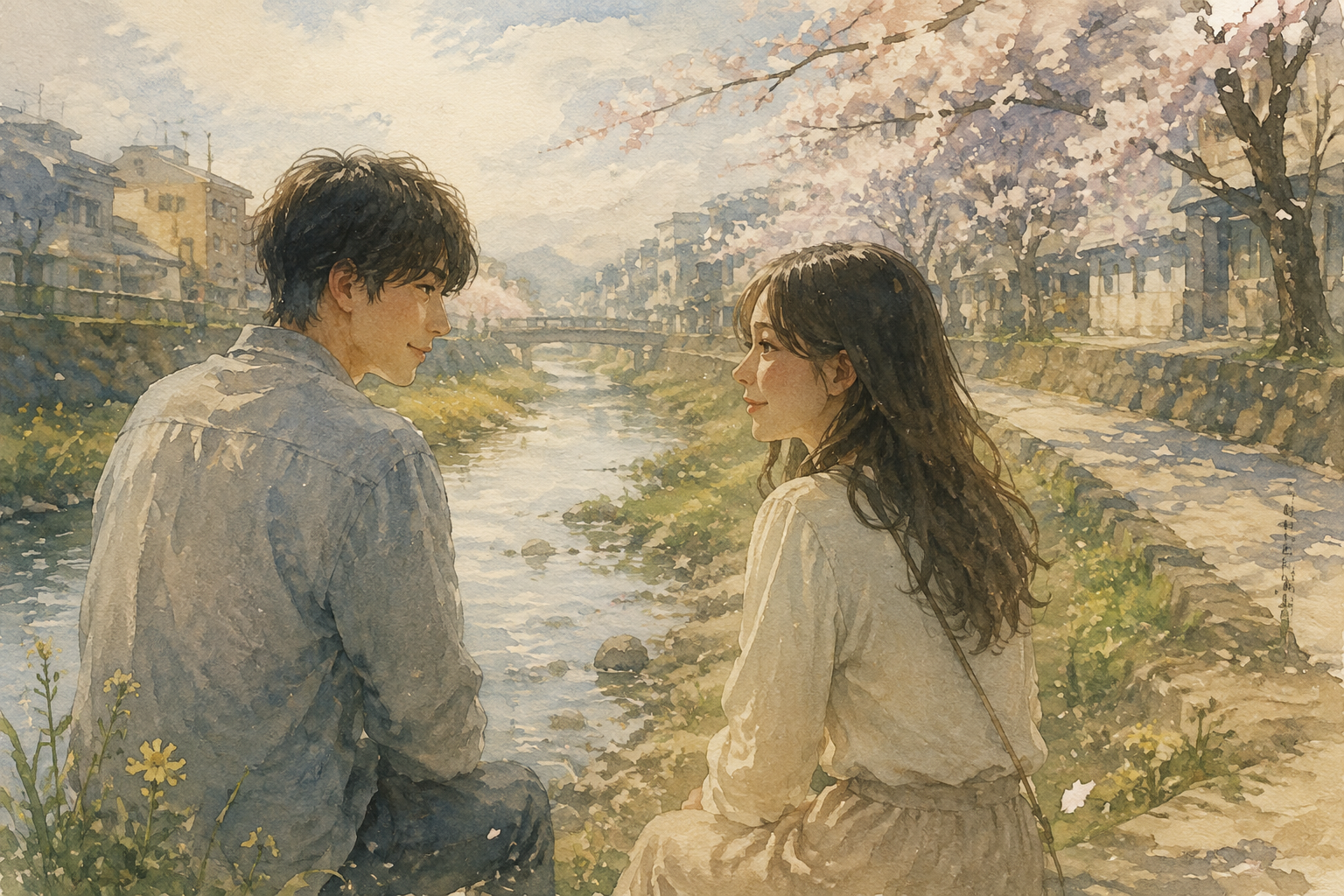
The chorus draws strength from the experience of love and from modest joys. This reading treats that strength as something the speaker may carry beyond the relationship's immediate situation. It is possible to retain a new capacity for tenderness or courage even when the person associated with it is no longer beside you.
Calling the whole relationship a failure because it ended would make the ending the judge of every day that preceded it. The song invites another possibility: what happened between two people may remain part of who they became. This need not idealize an unsuitable relationship or demand a return to it. It separates remembering something valuable from deciding that the past ought to be restored in full.
A wish to meet again is not a prediction
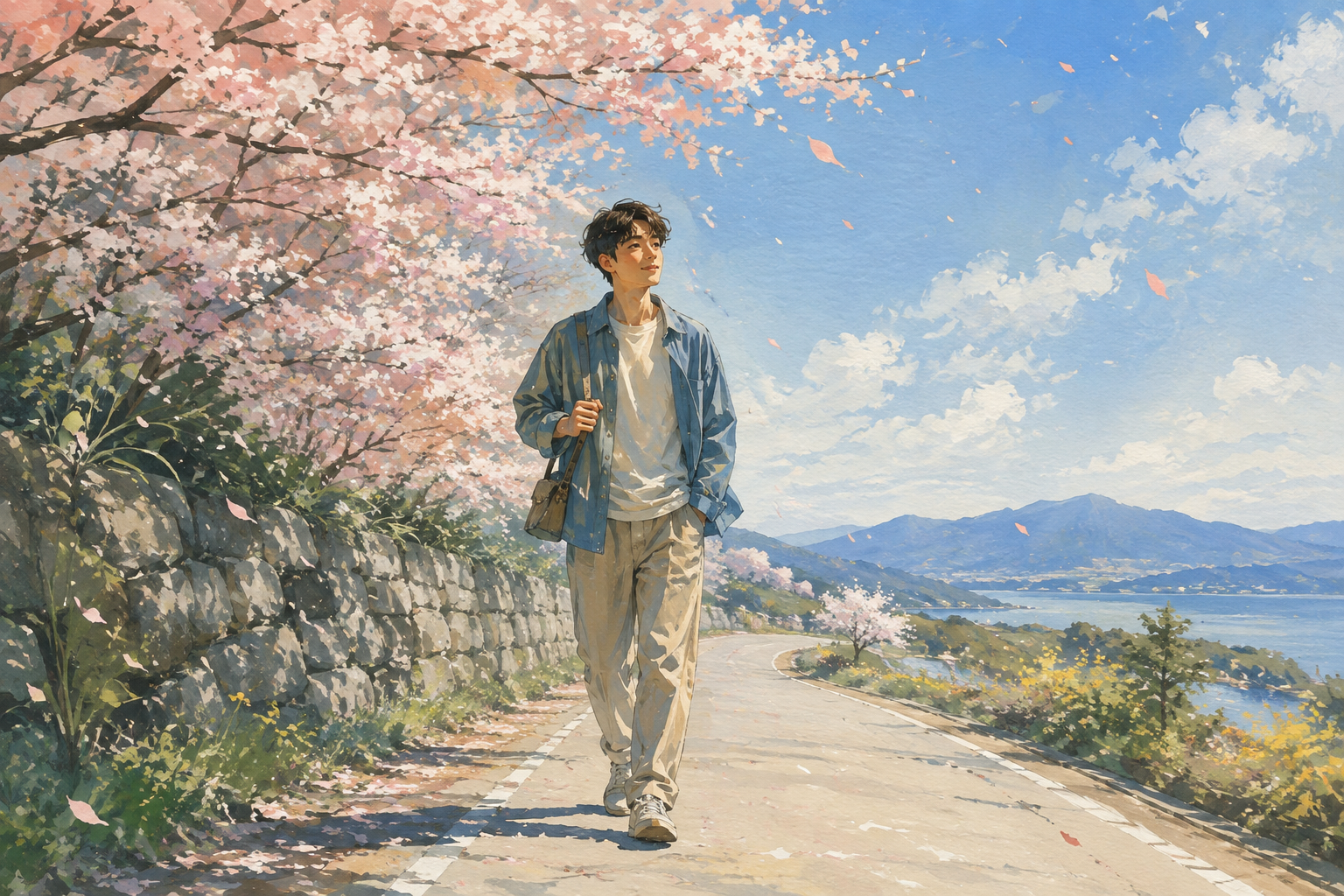
There is awkwardness in this recollection too. Feelings put into a letter can become embarrassing once they have been exposed. That detail keeps the remembered person from becoming a perfectly composed romantic figure. Looking back includes the wish to have expressed something and the wish to hide how much it mattered.
The desire for another meeting remains a desire. Reading it as a promised reunion would close down the uncertainty that the song lets the speaker live with. In this interpretation, the next day is still available even if the meeting never arrives. Continuing does not require emotional amnesia; it can mean allowing a remembered affection to accompany a life that is no longer arranged around the same person.
A question for your next listen
Compare the song's forward movement with its recurring wish to remember. Does the return to memory stop the journey, or give it energy? Listen once for the brightness and once for the things the speaker cannot get back. The contrast may explain why this song can feel encouraging without becoming uncomplicated.
Spitz released Cherry (チェリー), their thirteenth single, on April 10, 1996. Masamune Kusano wrote the lyrics and music. This is the Spitz song, distinct from YUI's CHE.R.RY. The embedded music video is from the band's official spitzclips channel.
This reading follows the Japanese lyrics; it is commentary, not a full lyric translation. The illustrations are imagined scenes.