An endless journey can sound exhausting if it means never being allowed to stop. Owarinaki Tabi becomes more generous when heard as a refusal to decide too early that a person has nothing left to become. This interpretation moves from fatigue toward curiosity: not the confidence of someone who knows the next door will open, but the wish to find out what might still be there.
The speaker is already out of breath
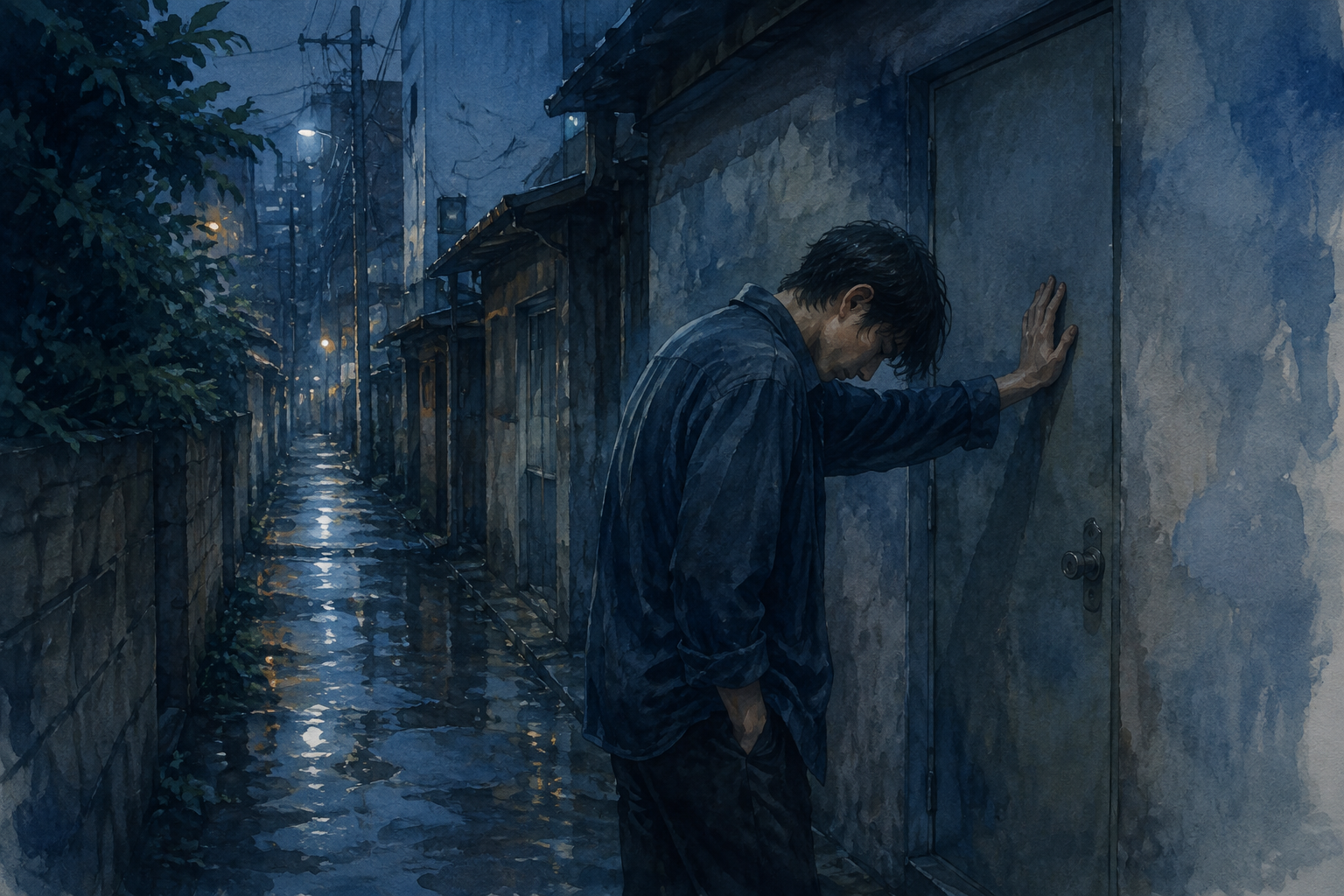
The voice seeking another beginning is not presented as untouched by difficulty. It carries exhaustion and a wish to be loved, even while questioning that need. The song finds the song's force in this exposure. Wanting reassurance does not disqualify the speaker from courage; it is part of the emotional situation from which courage has to be made.
That matters when an energetic chorus is detached from the rest of a song and used as a slogan. A slogan can make persistence sound effortless. Here, the earlier strain remains relevant. The appeal to continue comes from someone who knows the discomfort of needing recognition and not receiving a satisfying answer. The force is earned by admitting that discomfort rather than pretending it has never existed.
A door is interesting because its other side is unknown
The closed-door image does not establish that the next experience will be pleasant. In this reading, it makes room for an unanswered possibility. That is a smaller and more believable reason to begin than certainty of success. A person may be unable to promise a good result and still decide that the current result should not be their last word about themselves.
The high wall can be misunderstood as an instruction to make life harder or outperform somebody else. Read alongside that search for possibility, the obstacle instead becomes a question about a limit accepted too soon. That is an interpretation, not advice to ignore exhaustion. Resting today and surrendering every future possibility are different decisions; the song need not be used to blur them.
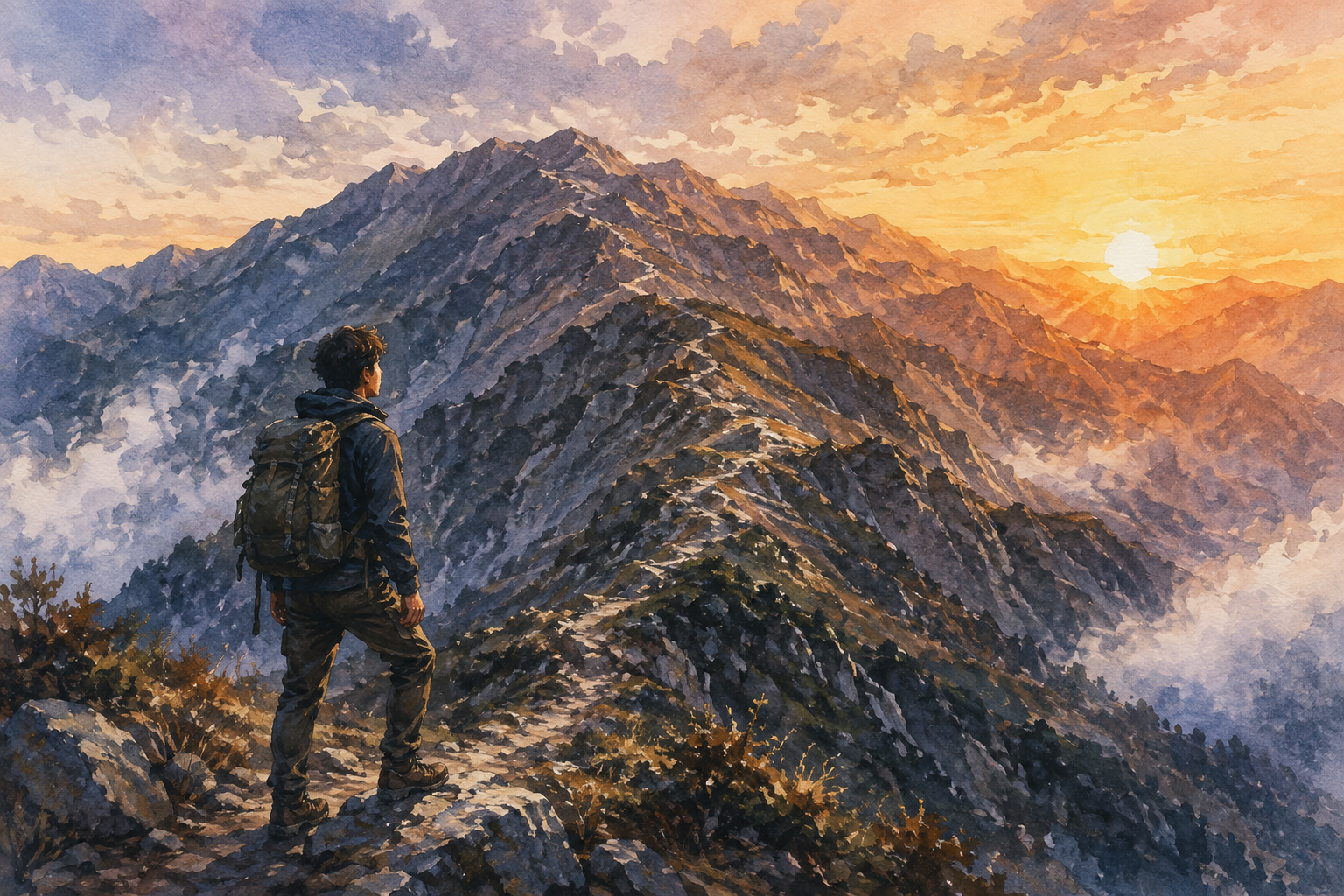
The journey keeps the question open

As the song gathers force, we can hear a question gaining energy rather than a problem being permanently solved. The title allows the journey to contain more than one difficult threshold. Passing one does not reveal a complete recipe for the rest of a life. The uncertainty remains, but its meaning can change from a reason for paralysis to a reason for exploration.
An everyday version might be returning to an unfinished project long enough to find the next small task. That example is not a scene in the lyrics. It translates the interpretation into a scale that does not require a spectacular reinvention. Leaving room for a future self can be a quiet act: declining to let today's disappointment describe everything you might later try, make or understand.
A question for your next listen
Start with the opening rather than jumping to the biggest chorus. What remains of its fatigue when the later passages grow more forceful? Then ask whether the song has supplied an answer or changed the speaker's willingness to continue asking. Those are different kinds of encouragement.
Mr.Children released Owarinaki Tabi (終わりなき旅) as their fifteenth single on October 21, 1998. Kazutoshi Sakurai wrote the lyrics and music. The title means an endless journey. The player uses the music video from Mr.Children's official channel.
This reading follows the Japanese lyrics; it is commentary, not a full lyric translation. The illustrations are imagined scenes.