There is a particular kind of loss in preparing for something that never happens. You cannot point to a disappointing score or explain how the performance went. The occasion itself has disappeared. Suiheisen, meaning horizon, speaks into that gap. Its comfort becomes more specific when we stop hearing it as a promise that hard work will eventually win and ask what remains valuable when there is no result to display.
Understanding the cancellation does not undo the loss
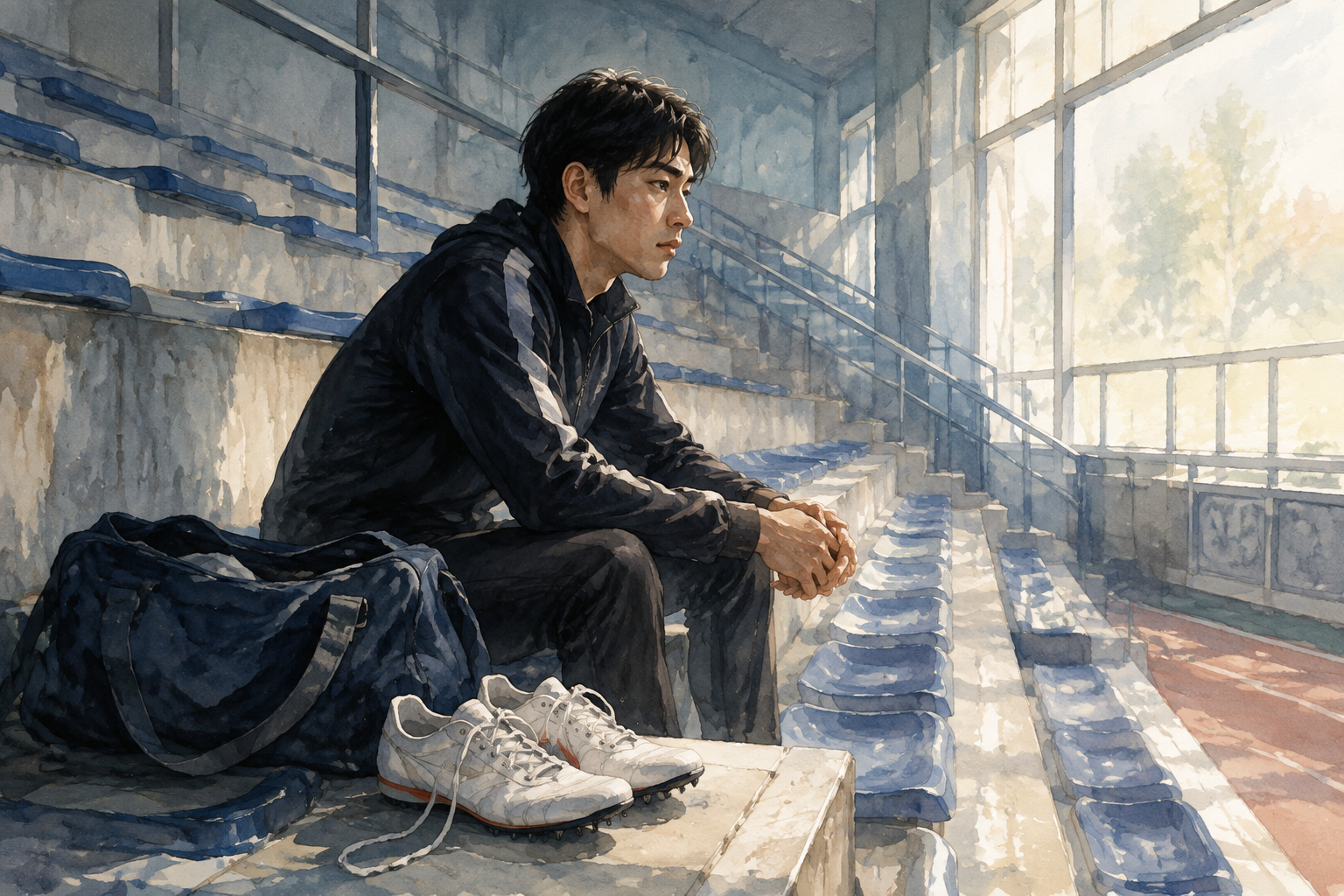
The song was made after the 2020 Inter-High school sports competition was cancelled during the pandemic. Students involved in its organization wrote to the band. The official announcement connects that letter with Iyori Shimizu's own school athletics experience and the event's planned location in his home prefecture, Gunma. This background gives the song an audience whose disappointment includes both competitors and the people working to make the competition possible.
A useful distinction follows: a decision can be understandable without becoming painless. Explaining why an event could not go ahead does not return the months spent anticipating it. Telling someone that others are suffering too can unintentionally make their own disappointment harder to express. In this reading, the song allows that loss to occupy space before anyone tries to turn it into a lesson.
The same day can mean celebration and grief

The perspective widens beyond the person whose hope has collapsed. A day of accomplishment can coexist with somebody else's distress. This does not make joy illegitimate. It asks for a little uncertainty about what our own happy moment means to everyone around us. The experience of being overlooked can become a reason to notice another person's invisible circumstances.
Consider a results announcement. One person may want to share the news immediately while another needs time before joining the celebration. Neither response necessarily tells us how much they care about the other. That is an everyday analogy, not an extra scene from the lyrics. It shows why empathy is more demanding than deciding who deserves the happier ending: people may be living through different endings at the same moment.
A day without a record still contained a person

This reading returns to the days that leave no trophy, photograph or memorable outcome. Public recognition makes some experiences easy to name. Its absence can make other days look empty from outside, even when they were full of effort. The essay reads the song's insistence on an unseen presence as a refusal to confuse those two things.
The horizon does not give back the cancelled occasion. It offers a different scale on which to imagine what comes afterward. A painful experience may one day be seen differently without becoming something that needed to happen. That leaves room for a listener who is not ready to feel grateful or motivated. Relief can begin with acknowledging a disappointment accurately, without being required to produce a positive conclusion immediately.
A question for your next listen
On another listen, follow the movement between your disappointment and somebody else's unseen day. Does the song merely reassure its listener, or also ask the listener to become more attentive? That shift is what keeps its comfort from turning into a simple prediction of future success.
Back number first shared Suiheisen (水平線) through the official lyric video on August 18, 2020, the originally planned opening-ceremony date. Iyori Shimizu wrote the lyrics and music. The player below is that lyric video; the initial video unveiling should not be confused with the later commercial digital release.
This reading follows the Japanese lyrics; it is commentary, not a full lyric translation. The illustrations are imagined scenes.