Deleting a message can make the screen look as though nothing happened. You know otherwise: there was a sentence, a doubt, a different sentence, then another attempt to imagine how it would sound to the person receiving it. Boku Note by Sukima Switch takes that uncomfortable gap seriously. Its writing imagery offers a way to think about communication when the feeling is clear enough to hurt but the wording refuses to cooperate. The most interesting question is not how the speaker finally finds a perfect phrase. It is what changes when imperfect attempts stop being treated as evidence against him.
A blank page can be crowded
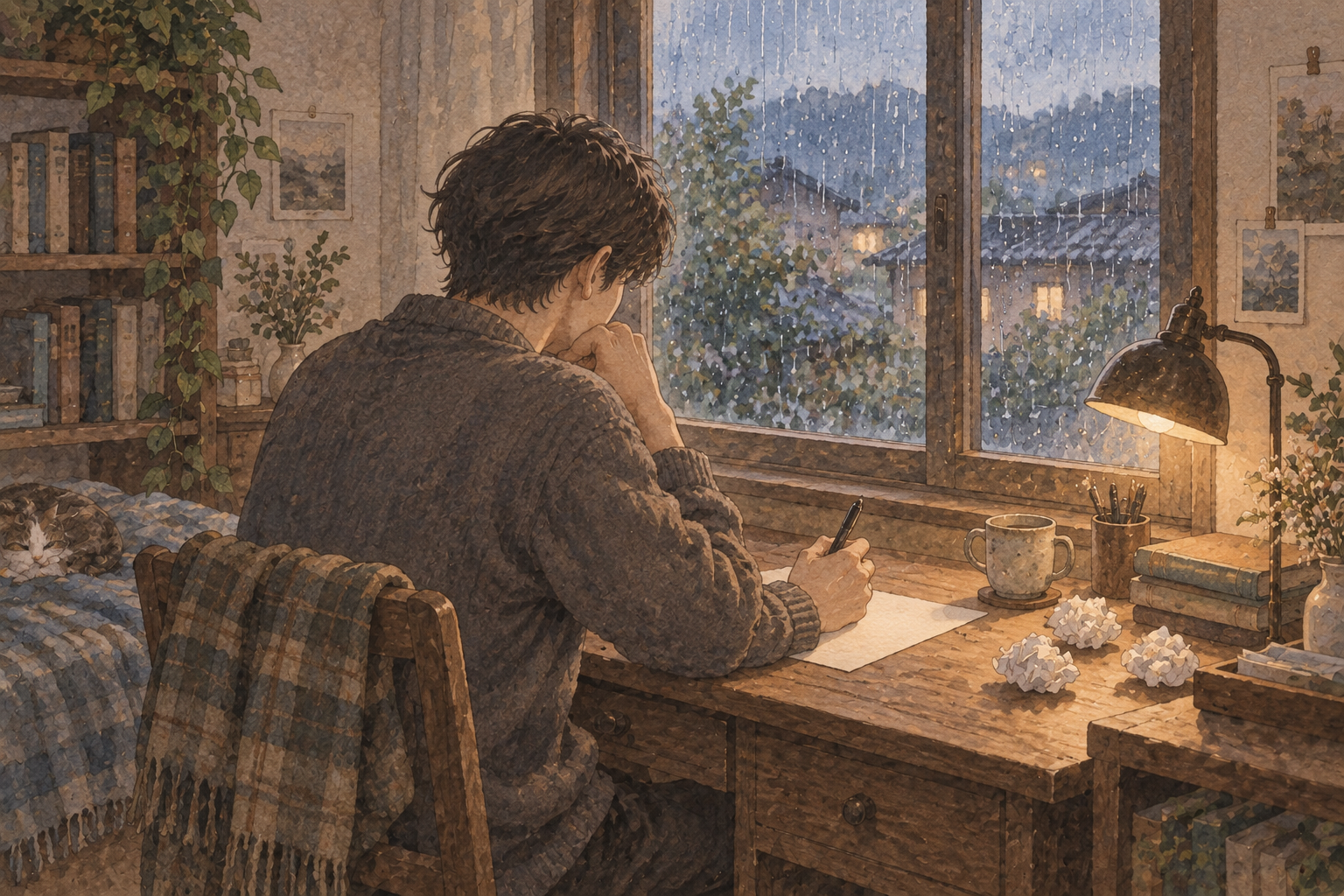
The lyric begins with writing and erasing, with effort that leaves little usable material. Silence here does not mean indifference. It can be the result of too much internal checking. That is a useful distinction when listening to a song about somebody who cannot get words out: a lack of expression is not automatically a lack of feeling.
There are at least two tasks hidden inside an apparently simple message. One is deciding what you want to say. The other is controlling how it will be received. You have some power over the first and much less over the second. Trying to finish both before writing a sentence can leave you unable to begin. I hear the song's blocked writer at that intersection, rather than as somebody merely waiting for an attractive turn of phrase.
For a listener, this suggests a small experiment. Think of an unsent, ordinary message and separate its purpose from its ideal tone. Is the purpose to thank someone, make a request, or admit a mistake? A plain answer may expose the essential point more clearly than the version designed to sound effortless. This is an application of the reading, not an instruction claimed to come from the band.
The discarded drafts change meaning

The scraps matter because they return as traces of a struggle that belongs to the speaker. Their value changes without the writing on them necessarily improving. Something once judged only as a failed result can also record an attempt to reach another person. That is a more interesting shift than a sudden discovery of literary talent.
Accepting that effort does not mean every first draft should be sent. A message can still be confusing or unfair, and revision can be a form of care. The distinction is between improving a sentence and making the sentence a verdict on your entire character. If every awkward phrase proves that you are hopeless at expressing yourself, there is no safe place to practise.
An apology makes the difference especially clear. A polished paragraph can still avoid responsibility; a short, unshowy sentence can name what happened and what you intend to change. Conversely, sincerity does not excuse a careless demand for immediate forgiveness. Keeping both possibilities in view prevents the song's encouragement from turning into a claim that honest feelings always produce good communication. What it can offer is permission to work with what is there.
The listener gives the writing a direction
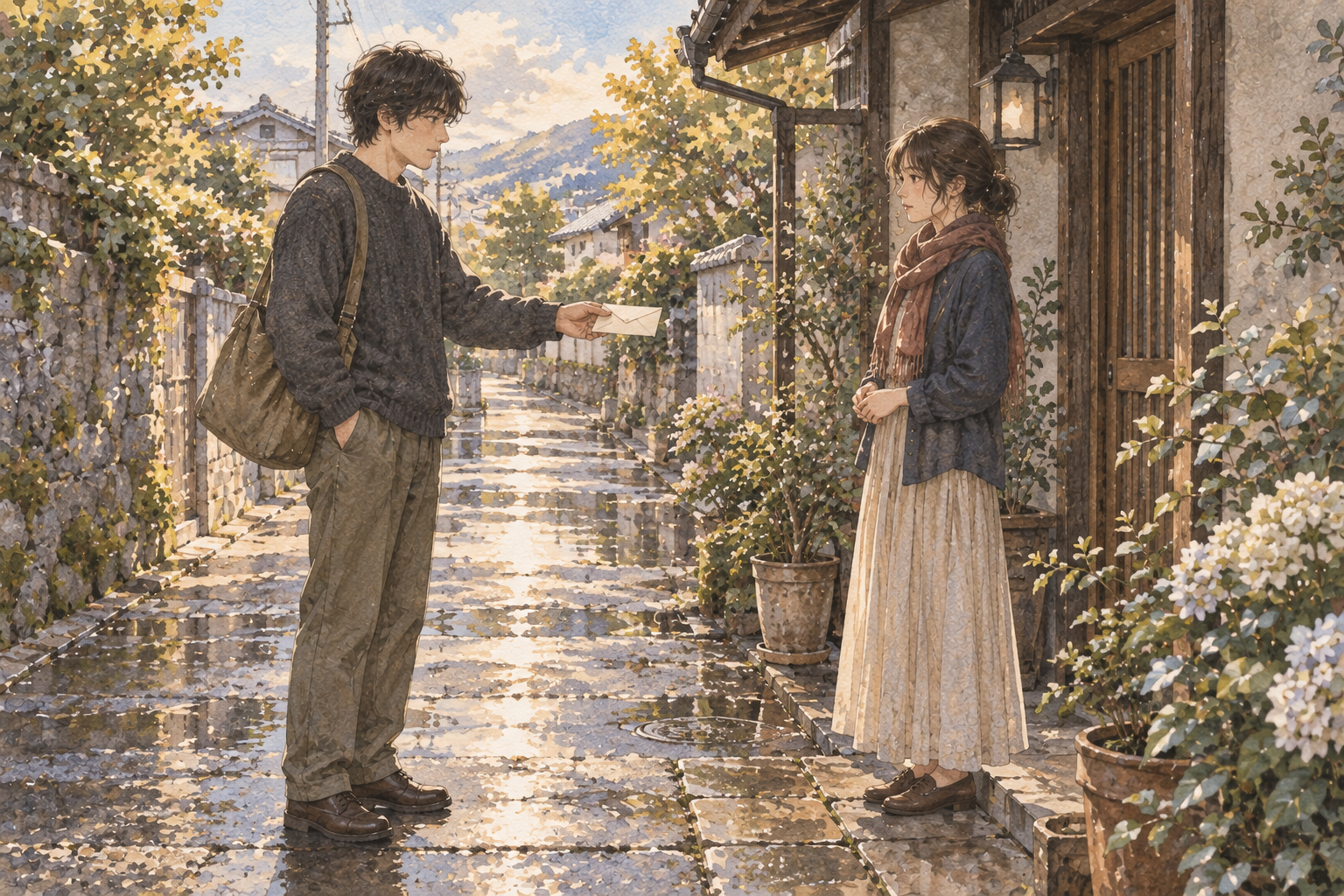
The writing does not exist only for the writer to admire. There is somebody he wants his voice to reach. That presence gives the struggle its stakes and eventually a direction. A song about personal expression becomes more generous when we remember its recipient: the point is not just to prove that the speaker has a voice.
On a replay, notice the rain at the opening and the speaker's own sound later. The change in what receives attention helps frame the movement from listening outside himself to recognizing what he can contribute. It need not be read as a claim that the weather fixes the problem. The outside scene and the act of expression can develop together without one being a literal cause of the other.
This also leaves a limit worth respecting. A listener can be moved by an honest message without being able to give the response its writer hopes for. The song's emotional lift need not be a guarantee of agreement or reconciliation. For me, its lasting reassurance is smaller and more usable: expression does not have to emerge fully formed to be worth shaping, and the person beyond the page is a better guide than an imaginary panel judging every word.
A question for your next listen
Follow the scraps of writing rather than treating them as disposable scenery. When do they seem like waste, and when do they become part of the person speaking? Then listen for how the presence of a recipient changes the purpose of the song.
Boku Note (ボクノート) was released on March 1, 2006. Takuya Ohashi and Shintaro Tokita wrote the words and music. It is the theme song for Doraemon: Nobita's Dinosaur 2006. The player below uses Sukima Switch's official music video.
This reading follows the Japanese lyrics; it is commentary, not a full lyric translation. The illustrations are imagined scenes.