A flower can stand out without being the rarest or the most beautiful one in the shop. It might be the kind someone used to buy, or the one that grew along a route you walked together. BUMP OF CHICKEN's Hana no Na makes room for that kind of recognition. Its title means ‘The Name of the Flower,’ but the question worth following is not which species the lyric describes. It is how one person becomes irreplaceable without having to win a comparison with everybody else.
A choice does more work than a compliment
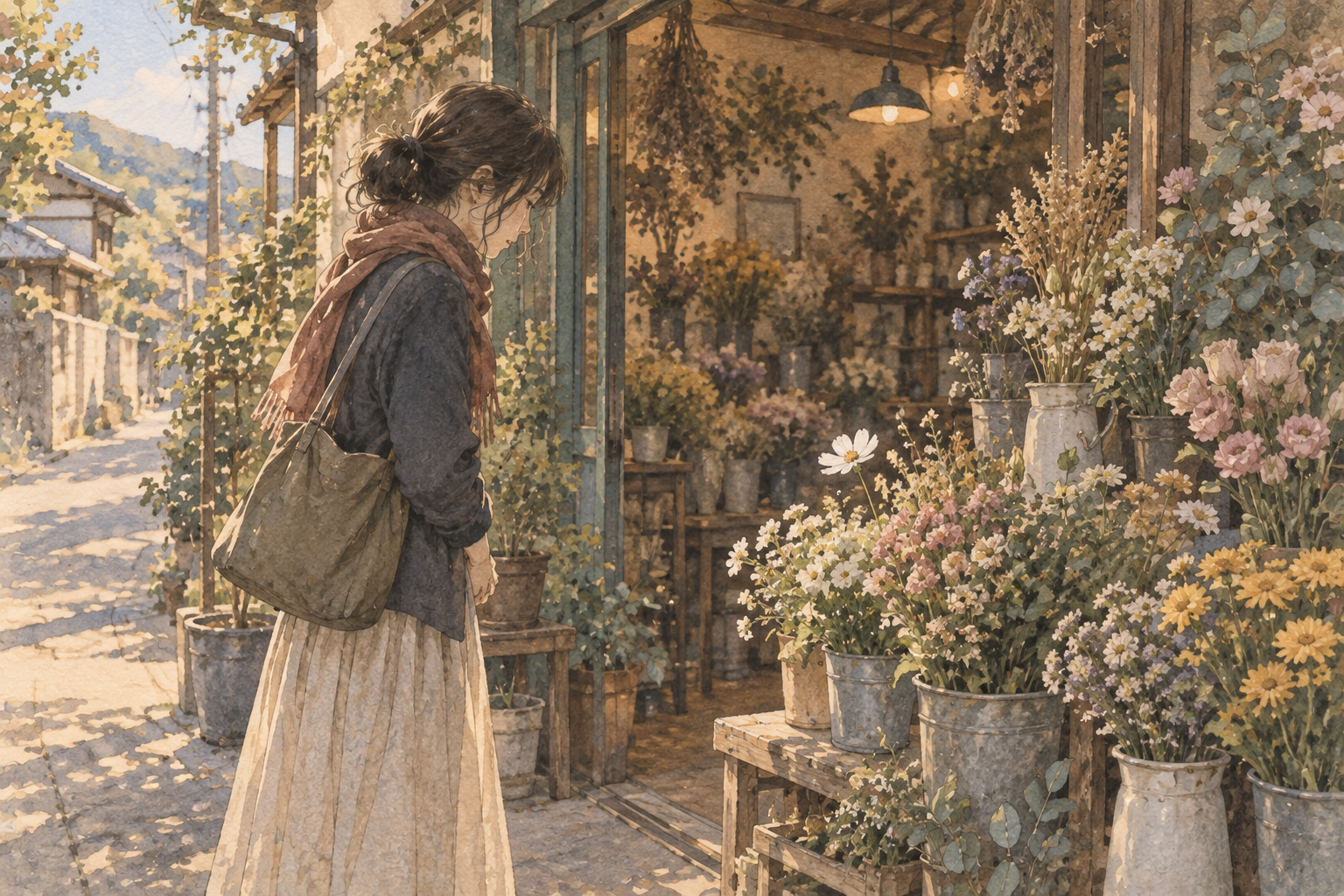
At first, the flower comparison can sound like familiar praise: the beloved must be extraordinary. Yet the lyric allows the possibility that this flower is not so different from the others. That qualification matters. It makes the act of choosing more interesting than a claim of superior beauty. The relationship does not need a ranking system to justify why this particular person matters.
This is also a useful way into the title. Naming a species would give us something other people could identify and classify. Recognizing a person through shared experience is a different kind of knowledge. Two listeners can picture entirely different people and still follow the same emotional logic. The flower remains open enough to carry those differences. Looking up a flower meaning and treating it as the song's hidden answer can close down that openness too early.
There is a practical distinction here between a reason that can persuade strangers and a reason that makes sense inside a relationship. A habitual joke, a quiet act of help, or a familiar way of listening may never sound impressive in a list of qualities. Their significance comes from having happened between these people. That is my reading of the metaphor, rather than a documented explanation of the songwriter's title.
Remembering the picture is different from carrying the relationship

The opening distinguishes the details of a shared view from the fact of having shared it. That distinction gives imperfect memory some room. You might no longer remember the weather on a trip, the order of a conversation, or what was on the table. Those missing details do not necessarily erase the sense that someone made the day easier to inhabit.
A photograph can help recover what a place looked like. It cannot, by itself, explain why standing there with one person felt different from standing there alone. Thinking about that difference makes the song's gratitude feel less like an exercise in keeping a flawless archive. The listener is not being asked to pass a memory test before a relationship can count.
Gratitude can then become an action in the present. Remembering that someone supported you and asking how they are today are related, but they are not the same act. The song can bring that small gap to mind without needing to be fixed to a single story of bereavement or separation. The lyric leaves space for someone who is still close enough to call.
Listen for the singer and listener changing places

On a second listen, follow the pronouns through the returning chorus. The person offering a song and the person able to receive it do not remain in one permanent arrangement. Their places change. Repeated melody therefore carries a development in the relationship, rather than merely restating a compliment more forcefully.
That switch is easy to miss when attention stays on the most memorable image. It also prevents a reading in which one person possesses all the strength and the other only receives it. Each can offer something the other can recognize. Being important to someone does not have to mean becoming their flawless rescuer.
The waiting near the end belongs in this reciprocal frame. Wanting to see somebody and being somebody another person waits for are different positions. Holding both in mind brings the flower image back into focus: the speaker can recognize one person among many, while also being a particular person in somebody else's world. The song's comfort comes from that mutual recognition more than from a promise that distance or grief will disappear.
A question for your next listen
Try one replay with a narrow question: who is singing, and who is listening, each time the chorus returns? You do not need a full translated transcript to notice how those roles reshape the flower comparison.
Hana no Na (花の名) was released as a single on October 24, 2007. Motoo Fujiwara wrote the words and music. The video below is from BUMP OF CHICKEN's official channel; its upload date is not the single's release date.
This reading follows the Japanese lyrics; it is commentary, not a full lyric translation. The illustrations are imagined scenes.