Kaede leaves an absence in the room without fully explaining how it began. That openness is worth protecting. The song can become less convincing if every uncertain detail is forced into a definite breakup, a death, or an eventual reunion that the listening experience itself does not establish.

A small kindness explains a large absence
The remembered person is not important only because of a dramatic event. Shared humor and the softening of the speaker's rougher feelings suggest a relationship embedded in daily life. Someone can change the emotional texture of a day without leaving a list of accomplishments that explains their value.
That makes ordinary silence a useful way into the song. As an analogy, imagine having news to tell and momentarily reaching for a familiar person who is no longer available. The analogy is not an extra scene claimed to appear in the lyrics; it helps describe why the memory can feel so close. The absence is substantial because the connection used to occupy small, recurring moments, not because the listener has been supplied with a dramatic final incident.
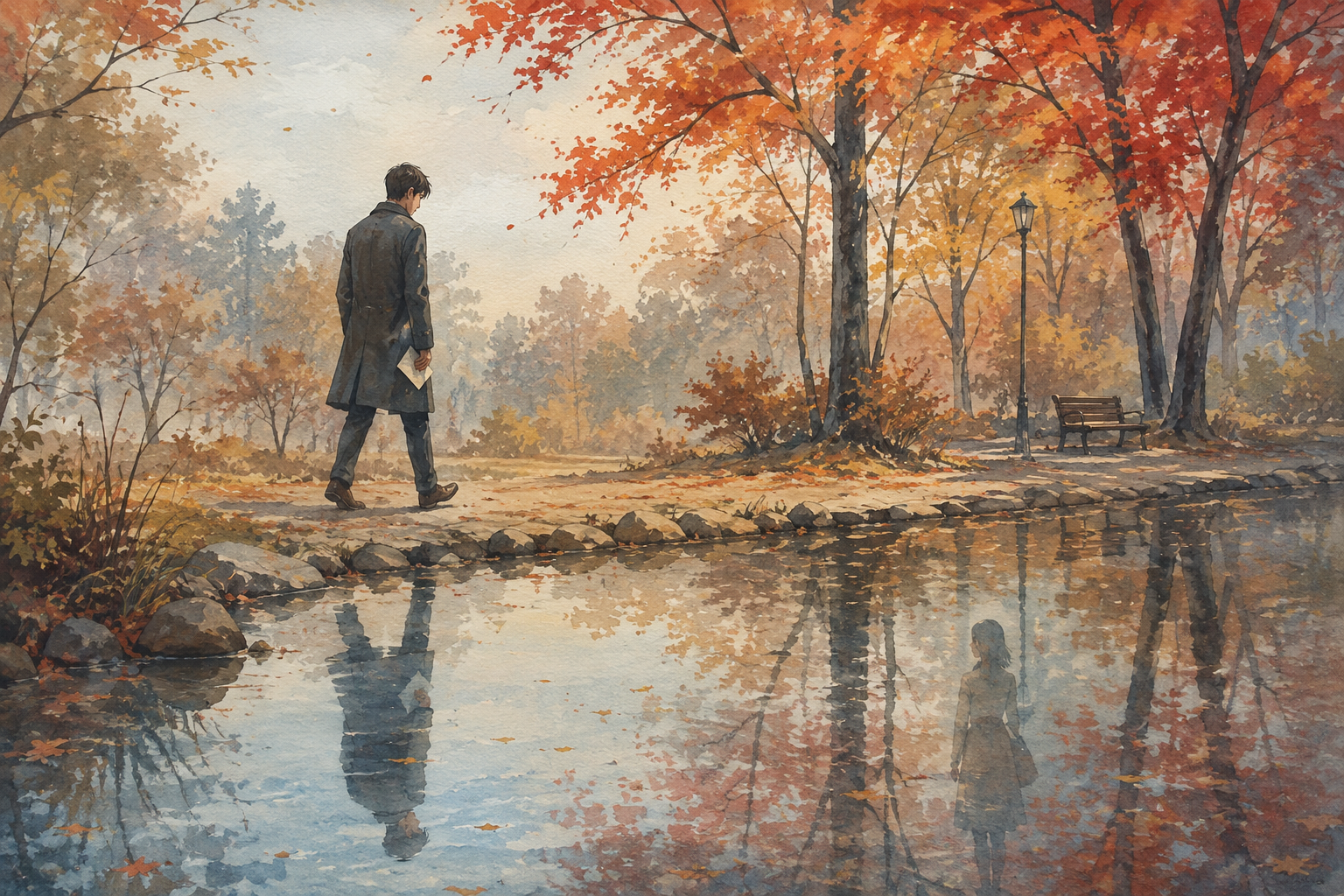
A remembered voice is a presence of a different kind
The voice image holds together two things that seem opposed: the person is absent, yet their influence has not simply stopped. Remembered speech can shape how someone responds to a present decision. It need not be treated as a supernatural message or evidence of an actual conversation happening now.
Keeping the cause of separation open also changes the listener's role. One person may hear a former relationship; another may hear bereavement or a distance that cannot be crossed. Those readings are not identical, but the song does not require this commentary to settle between them. What they share is the difficulty of acknowledging that a familiar form of contact has ended while still feeling the other person's voice as part of one's inner life.

Repetition does not have to mean returning to the beginning
The later movement does not transform the speaker into someone immune to hurt or incapable of hurting others. Loss has not automatically supplied wisdom. That remaining awkwardness prevents the song from becoming a lesson delivered after everything has been resolved. The person left behind is still living, still imperfect, and still uncertain about what follows.
When the central feeling returns, hear it as another encounter with the same absence rather than proof that nothing has changed. A goodbye can have to be made more than once in memory, even when circumstances do not change. Compare the first return with the last: what has accumulated around the familiar words? Kaede leaves room for that question without rewarding it with a promised reunion. Its consolation lies in making the unresolved feeling recognizable, not in predicting a happier ending.
Listen with this question in mind
Listening focus: separate what the song leaves unspecified from what it makes emotionally precise. Uncertainty about the separation does not make the remembered voice vague.
Kaede (楓, meaning maple) appeared on Spitz's Kaede / Spica single, released July 7, 1998. The embedded player is the official spitzclips music video.