Cherry blossoms come back more reliably than the circumstances in which we first noticed them. SAKURA places returning scenery beside a relationship changed by graduation and separate paths. In the Korean commentary adapted here, the speaker misses both another person and the version of the future they once imagined together. Moving forward does not require making that earlier spring meaningless, but neither does remembering it supply a promise of reunion.
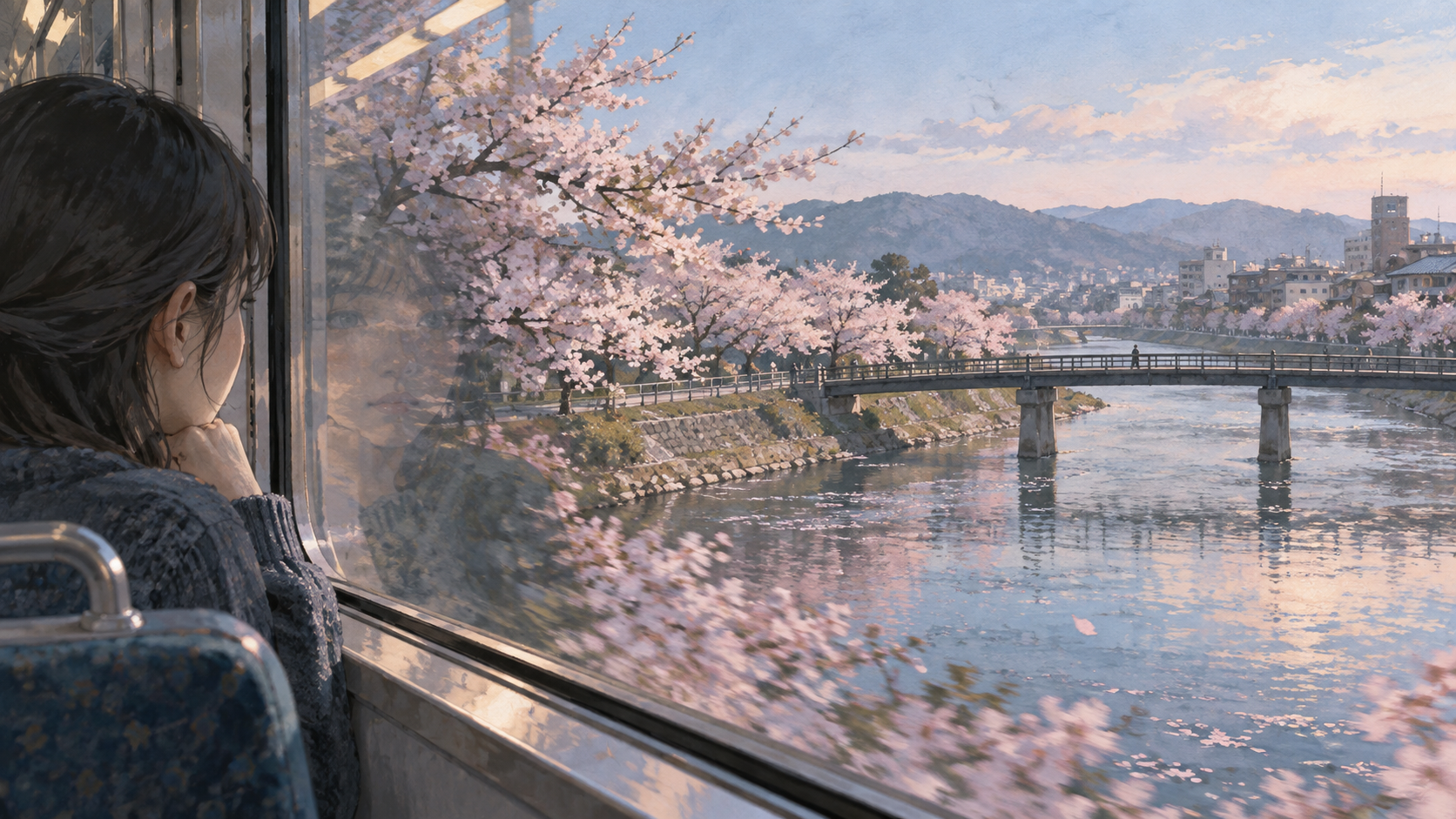
The remembered bridge matters more than a generic blossom
The view from a train leads toward a bridge the two people once crossed. The landscape has emotional force because it contains shared movement through an actual place in the speaker’s memory. Treating the blossoms only as decorative beauty misses that connection between the current view and an earlier time.
Graduation introduces a separation that does not need a villain. Choosing different paths can be understandable and still hurt. The future can appear necessary without appearing reassuring. This is why the spring setting does not make the song simply celebratory: a season associated with beginnings can also reveal who is no longer beside the speaker.

An ordinary letter can contain an uneven reassurance
When the season returns, the other person’s voice returns in memory. The relationship itself does not return to its former arrangement. The original commentary notices the weight of ordinary greetings and small untruths in a letter: wanting the other person to be well is not the same as being fully at ease oneself.
Growing older without the other person also raises a different fear. What if moving on means forgetting the feeling with which they once looked ahead? The object of longing becomes more complicated than a missing partner alone. It can include the earlier self who believed in that shared future, without making the present self less real.
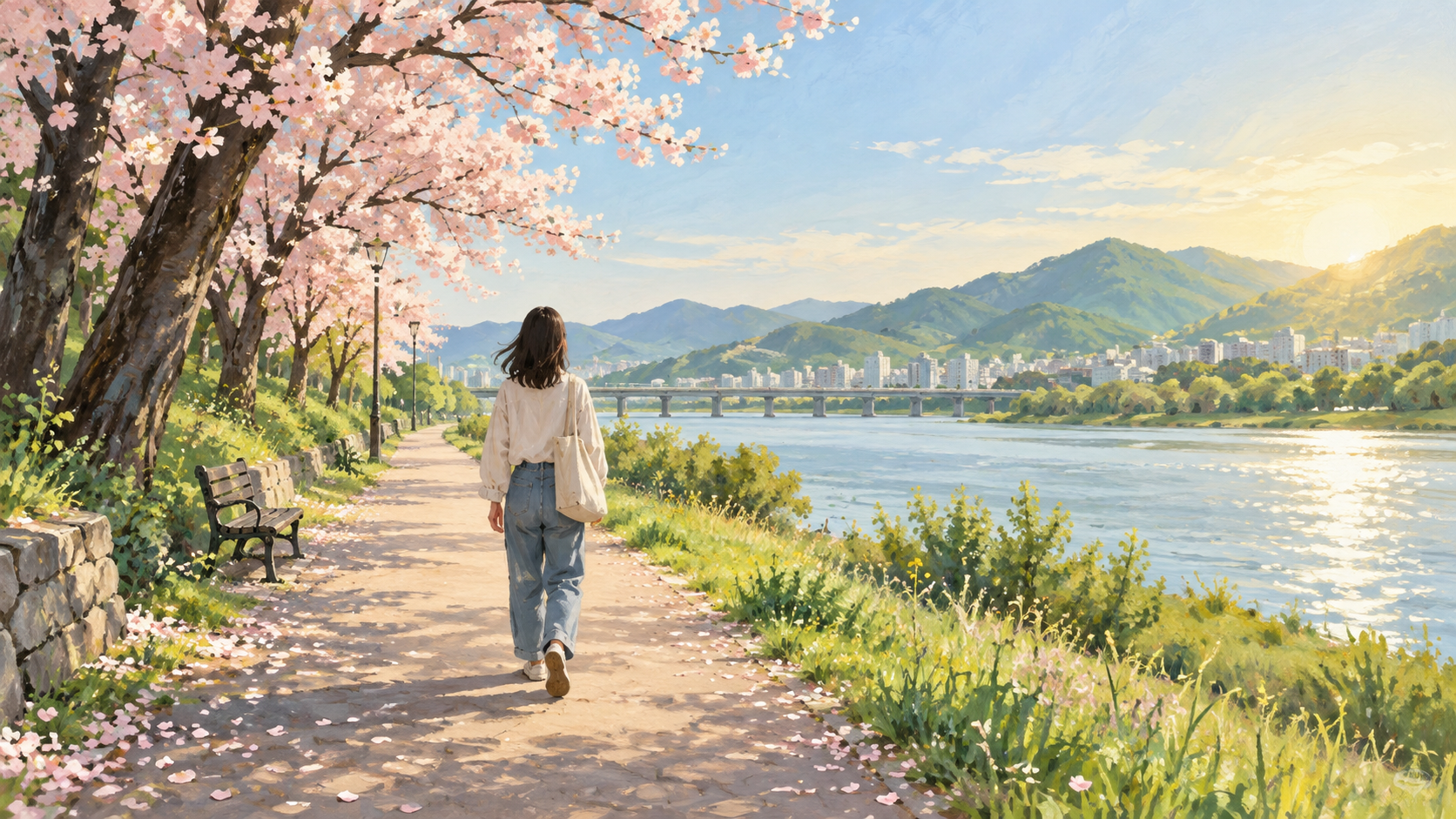
Walking onward can preserve something rather than erase it
The Korean reading hears the ending preserve a dream once held together. The speaker does not need to recast affection as a mistake before continuing. This gives the movement forward a different quality from a dramatic rejection of the past: the memory remains something to carry, even as life changes around it.
There is no guaranteed reunion to finish the story for the listener. Nor must longing disappear before movement becomes possible. On a second listen, notice how the blossoms first awaken an absence and later accompany a person continuing beyond it. The repeated season frames change in the speaker rather than undoing the separation.
Song details and listening companion
Ikimonogakari — SAKURA. The artist’s official discography entry is dated March 15, 2006.
Listen for three kinds of time: the spring remembered, the spring returning now, and the future the speaker has to enter. Keeping them distinct explains the ache more clearly than reducing the song to a beautiful farewell.