In Ai Otsuka’s Planetarium (プラネタリウム), a beautiful summer night does not simply offer comfort. Its familiar sights make an absent person harder to forget. The central movement in this reading is from remembering a shared place to admitting how much it hurts to stand within that memory alone. The song becomes more precise when we resist supplying a definite cause for the separation.

The present landscape contains a second time
Evening details establish a world that is still moving: the moon is visible and children’s voices recede. Memories of a park and constellations then overlap that present scene. The setting has two functions at once. It places the speaker somewhere concrete, while also making that place difficult to experience without the person who once shared it.
The distance toward that person is imagined through the sky, but the original interpretation does not turn this into a conclusive account of death or a particular breakup. That restraint matters. A listener can recognize the pain of being unable to meet someone without deciding that every image proves one specific backstory. The emotional absence is clearer than its cause.
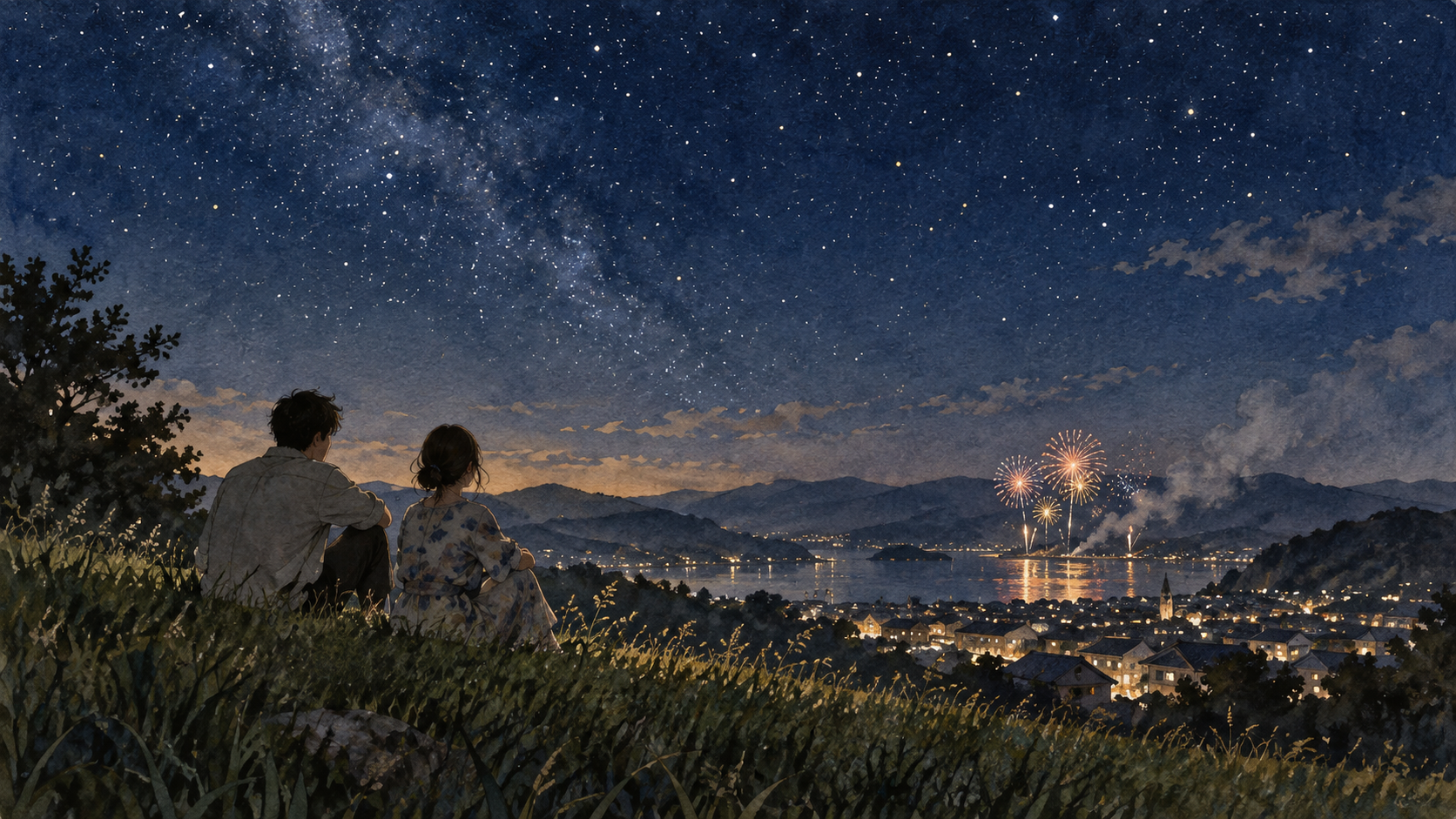
A remembered smell makes the past feel close
The fireworks are remembered through smell as well as light. This is a more intimate form of recollection than a general statement that the summer was happy. A sensory detail can bring back an occasion with uncomfortable immediacy: the memory feels near even when the person cannot be reached. Beauty and pain arise from the same vividness.
The desire to run toward the other person, even through darkness, intensifies this mismatch between emotional closeness and actual distance. The resolve not to cry can be heard as an effort to remain upright inside that feeling. It need not mean that the sadness has been overcome. In this reading, the resolve tells us how much effort the speaker is making.
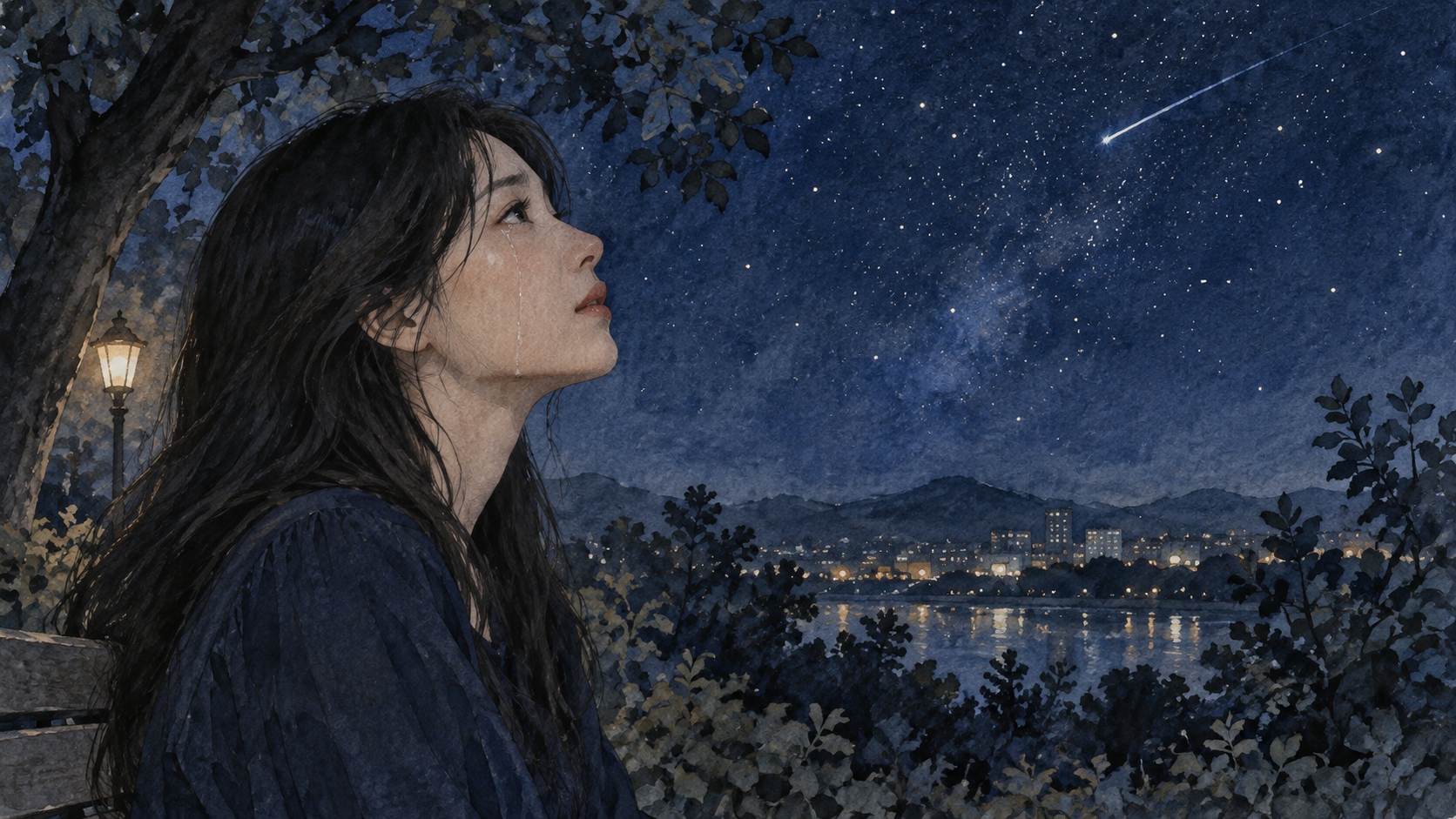
The ending changes what endurance sounds like
The familiar surroundings remain, while the grief grows. This reverses an easy expectation that returning to a meaningful place will necessarily be healing. A park or a sky can hold treasured memories and still confirm that the present is different. Nothing in the scenery has to disappear for the loss of company to feel overwhelming.
Near the end, the earlier determination gives way to an admission of wanting to cry. That change is the emotional hinge of this interpretation. The speaker has not discovered an answer to the separation; the language used to endure it has become more honest. Listen to the ending beside the earlier resolve, and the repetition of the setting becomes a measure of the speaker’s changing capacity to contain the feeling.
Song details and official video
Ai Otsuka — プラネタリウム (Planetarium). Released as a single on September 21, 2005; the official avex listing includes vocal and instrumental versions.
Compare the early refusal of tears with the ending. The key change is in the speaker’s acknowledgment of grief, not in a newly explained backstory.